Sleep health core information and explanations
The first is that the sleep rhythm is stable for a long time, the second is that the sleep structure is complete and the quality is up to standard, and the third is that there is no obvious functional impairment in the waking state. All talks about sleep health that are divorced from these three standards are essentially pseudo-science.
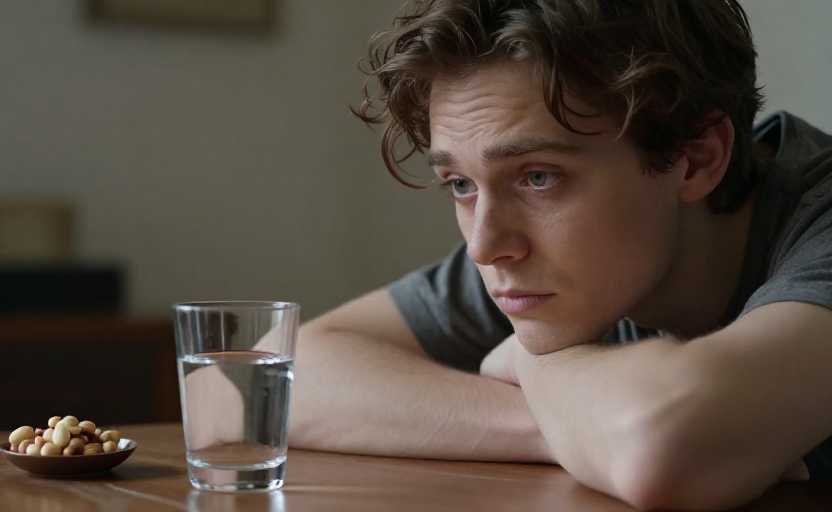
I have been doing sleep health consulting for 5 years, and the most common misunderstanding I have encountered is that people are obsessed with sleep duration. A girl who works in Internet operations came to me and said that she slept for 7 hours a day, but she still lost her hair, had aunt disorders, and could not keep her eyes open even when fishing during the day. When I asked her about her daily routine, she goes to bed at 3 a.m. and wakes up at 10 a.m. on weekdays, and lies in bed until 2 p.m. on weekends. This is not enough sleep. This is giving herself "social jet lag" every day.
You can think of your body's biological clock as a small built-in alarm clock engraved in your genes. It is not a custom alarm clock that you can change on your phone. It originally follows the rhythm of the sun. If you stay up until 3 o'clock today and go to bed at 9 o'clock tomorrow, it is equivalent to adjusting the time zone for it every day. It's weird if it doesn't get messy. Here is a point that has been controversial in academic circles: traditional sleep medicine advocates that ordinary people should maintain monophasic sleep (that is, sleep enough at one time at a fixed time every day), but some anthropologists have verified that before the industrial revolution, humans generally had a biphasic sleep pattern - sleeping for 4 hours at night, and waking up for 1-2 hours to read and chat. Even doing farm work and then sleeping for 4 hours. This pattern still exists in some remote farming areas without electricity, so there is no iron rule that "you must go to bed early and get up early". As long as you can maintain a long-term and stable schedule, even if you go to bed at 2 a.m. and wake up at 10 a.m. every day, and you are energetic during the day, then it is not a problem. Oh, by the way, about 10% of people are born with the "night owl genotype", which is a type of delayed sleep phase. If you force yourself to go to bed at 10 o'clock, you will suffer from insomnia. There is no need to go against your genes.
Let’s talk about sleep quality. The longer you lie down, the better. I met a retired man last year who lay in bed at 9pm every night and didn't wake up until 7am. Even though he slept for 10 hours, he still felt dizzy every day. When he went to the hospital for sleep monitoring, it was discovered that he had sleep apnea and woke up more than 30 times a night. Deep sleep accounted for less than 10%, which was equivalent to lying down for 10 hours. The effective sleep was not as good as 5 hours of sleep for others. You can think of deep sleep and REM sleep as the super fast charge of your mobile phone, and the time of light sleep and waking up in the middle is the slow charge. If you plug in the slow charge all night, the battery life will not be as good as the 2-hour super fast charge. This is the reason. Normally, it is enough for adults to have deep sleep accounting for 20%-25% and rapid eye movement sleep accounting for about 20%. If you wake up and feel as heavy as carrying rice all night, or you wake up several times a night and have nightmares that can scare you into a cold sweat, even if you lie down for 12 hours, the quality of your sleep is still substandard.
As for the third item, "no obvious functional impairment when awake", it is actually the most down-to-earth criterion and the antidote to sleep anxiety for many people. To be honest, whether you sleep well or not, your body is more reliable than any APP’s sleep monitoring or any internet celebrity’s health tutorial. As long as you don't have to rely on more than two cups of coffee during the day, can concentrate on finishing the day's work, and don't feel sleepy while walking, even if you only sleep for 6 hours a day, that is healthy sleep. I met a medical student two years ago. In order to get enough "eight hours of health", he would lie down at 10 o'clock every night and could not fall asleep until 2 o'clock in the morning. Instead, he developed chronic insomnia, which was a typical example of being kidnapped by pseudo-science.
Of course, we must also mention a few "special sleep methods" that are now very controversial. For example, the Leonardo da Vinci polyphasic sleep method, which has been passed down for many years, says that you only need to sleep for 2 hours a day and sleep for 15 minutes every 4 hours of work. I have indeed encountered a few practitioners who are engaged in extreme scientific research and war reporters who use this method to deal with extreme work scenarios temporarily, but ordinary people should not try it blindly. Current large-scale evidence-based research has proven that long-term use of polyphasic sleep will lead to cognitive decline and endocrine disorders. The few who say that they have used it for several years without any problems are either talented or they are just catching up on sleep secretly. There are also melatonin and sleep-aid gummies that are very popular right now. Different schools of thought are also very controversial: it is okay to take some for short-term jet lag and temporary insomnia. If you take them for a long time, there is currently no large-scale safety data for more than 5 years. And if you have insomnia caused by anxiety or sleep apnea, taking more melatonin will be useless, and may delay the condition.
To put it bluntly, sleep is the most instinctive physiological need of human beings. It is the same as eating when hungry and drinking water when thirsty. There is no need to make so many fancy rules. If you really can’t fall asleep even if you lie in bed for more than an hour for more than half a month, or you always feel out of breath when you wake up, or you can doze off even if you stand during the day, don’t buy sleep aids or teas blindly. Go to the sleep department of a regular hospital for monitoring first. It will be more useful than watching 100 short sleep aid videos. After all, getting a good night's sleep is the cheapest way to maintain your health, right?
Disclaimer:
1. This article is sourced from the Internet. All content represents the author's personal views only and does not reflect the stance of this website. The author shall be solely responsible for the content.
2. Part of the content on this website is compiled from the Internet. This website shall not be liable for any civil disputes, administrative penalties, or other losses arising from improper reprinting or citation.
3. If there is any infringing content or inappropriate material, please contact us to remove it immediately. Contact us at: